

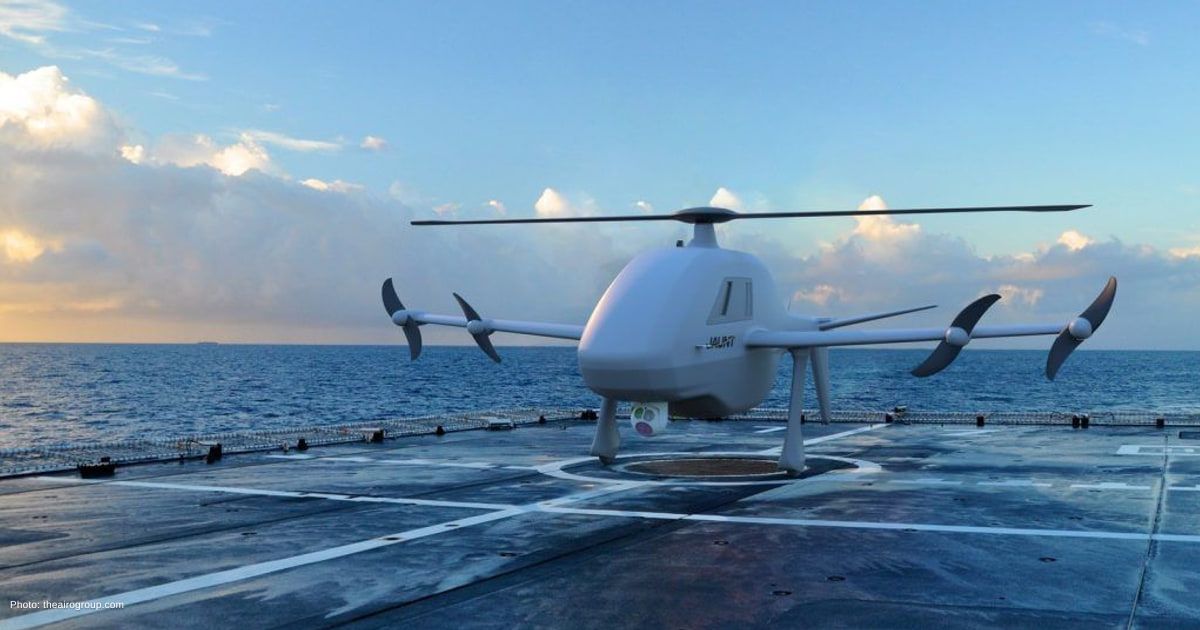
Battery heat, rather than headline-grabbing autonomy, may determine how far Jaunt Air Mobility’s next VTOL drones can progress. The AIRO subsidiary has chosen Quebec specialist Calogy Solutions to develop energy storage for the JC-250 cargo aircraft and JX-250 surveillance variant. Their work will test whether lighter thermal control can support demanding flights without burdening the airframe with complex liquid-cooling equipment.
Key Takeaways
Jaunt Air Mobility has partnered with Calogy Solutions to develop a novel passive battery cooling system for their next-generation VTOL drones, aiming to enhance flight performance and operational range.
- Jaunt Air Mobility is collaborating with Calogy Solutions to design a passive battery cooling system, the Uni.T, for their JC-250 cargo and JX-250 surveillance VTOL drones, which aims to manage heat effectively without the weight of liquid-cooling systems.
- The effectiveness of Calogy’s passive cooling solution is crucial for the VTOL drones’ performance, influencing usable power, mission duration, and overall integration, with the ultimate goal of achieving comparable results to liquid-cooling while reducing hardware and mass.
- Successful validation of Calogy’s battery system through flight testing is a key milestone for Jaunt Air Mobility, impacting the projected 2026 first flight and 2027 commercialisation targets, and could significantly advance the drones’ potential in logistics and defence applications.
A lighter answer to the battery heat problem
Calogy is bringing its Uni.T system to the project, using a passive approach to move heat away from battery cells. AIRO says the concept seeks cooling results comparable to liquid-based equipment, while avoiding the hardware and mass associated with liquid cooling.
Safety is important. The proposed pack is being engineered to function across changing environmental conditions and to limit the spread of thermal runaway, where heat from one failing cell can affect its neighbours. Neither aircraft has yet to validate those ambitions.
The appointment therefore concerns more than component supply. Battery temperature influences usable power, mission duration and integration choices throughout a hybrid-electric aircraft. Within dual-use technology defence, Calogy’s task is to turn thermal-management claims into evidence that flight testing can measure.
One power system must serve two different missions
One energy system must suit two different jobs. AIRO positions the JC-250 for cargo transport, remote replenishment and humanitarian support, while the JX-250 is aimed at intelligence, surveillance and reconnaissance. Both configurations share Jaunt’s developing VTOL platform.
That common foundation links the project to autonomous defence systems without making it a proven military product. AIRO forecasts more than 1,000 miles of range and 16 hours aloft for an ISR configuration, figures derived from design work and analysis.
Such projections explain interest in drone warfare technology and military autonomy. Persistent surveillance and runway-free resupply could expand operational choices, but those uses remain prospective. Calogy is developing an enabling battery subsystem, while the aircraft still requires integration, flight trials and customer validation.
Flight evidence will unlock the programme’s next stage
The next milestone is evidence. AIRO said in May that first flight was planned by the end of 2026, with commercialisation and initial operations expected from 2027. Those dates remain corporate targets rather than completed achievements, and successful battery integration will influence whether the timetable proves realistic.
Even so, the collaboration gives Jaunt a focused route forward. A lighter cooling solution that proves safe and dependable could improve the platform’s prospects in logistics, autonomous defence systems and drone warfare technology. Growth will come not from ambitious specifications alone, but from converting careful engineering into repeatable flight performance at commercial scale.