

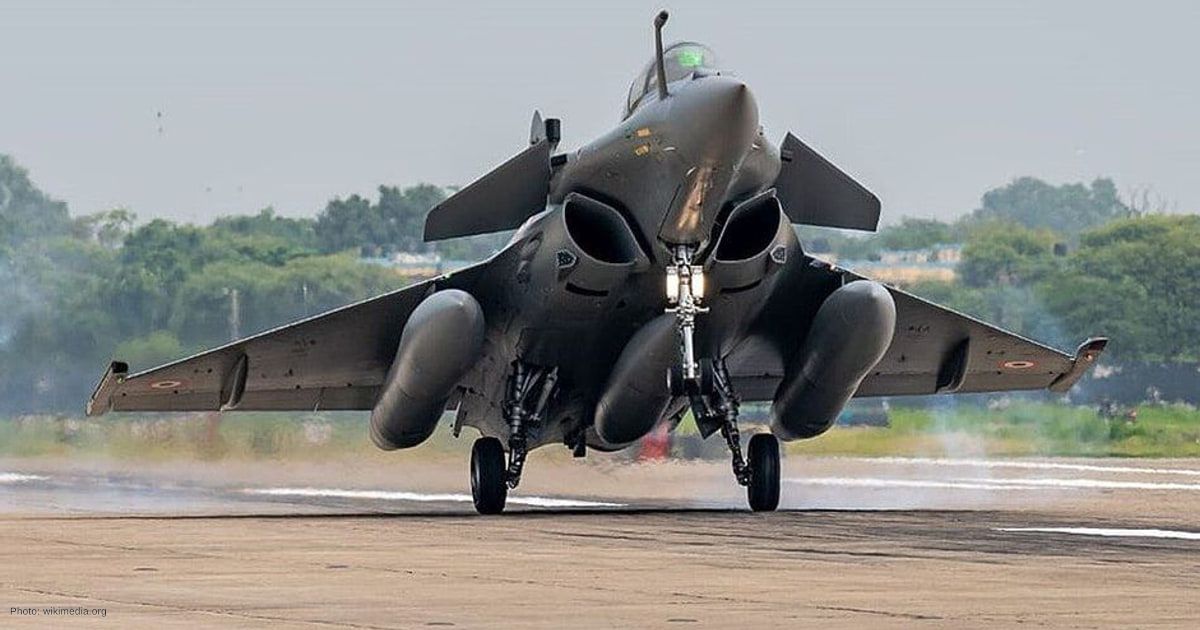
France’s Rafale F5 programme is emerging as a major step in the evolution of European air power, combining advanced technology, sovereign capability, and future combat concepts. As security challenges become more complex, the upgrade aims to strengthen France’s strategic position while contributing to the future of European defence technology.
The ambition behind Rafale F5 reflects a wider transformation in modern warfare, where connected systems, digital resilience, and independent decision-making are becoming increasingly important. Planned for the 2030s, the upgraded aircraft is designed to support France’s long-term defence priorities while reinforcing military autonomy Europe through advanced national capabilities.
Key Takeaways
France’s Rafale F5 programme is set to significantly enhance its air power by integrating advanced technologies, networked capabilities, and drone cooperation for future combat.
- The Rafale F5 upgrade will transform the fighter into a highly connected combat platform, featuring improved sensors, electronic warfare, secure communications, and compatibility with future weapons like the ASN4G nuclear missile.
- A core aspect of the F5 vision is its integration with a future stealth combat drone, enabling collaborative operations between crewed and uncrewed systems for enhanced reconnaissance, electronic warfare, and battlefield awareness.
- Beyond technological advancements, the Rafale F5 programme reinforces France’s military autonomy and contributes to a broader European effort to maintain advanced air power capabilities amidst evolving security landscapes.
Rafale F5 builds future air power systems
The Rafale F5 is not simply a routine aircraft improvement. It represents France’s effort to transform the fighter into a highly connected combat platform capable of operating within complex battle networks. Expected enhancements include improved sensors, advanced electronic warfare systems, secure communications, and compatibility with future strategic weapons such as the ASN4G nuclear missile.
Why does this shift matter? Future air combat will depend less on individual aircraft performance alone and more on how effectively platforms share information and coordinate decisions. The Rafale F5 reflects this change by moving towards a networked approach, where aircraft, unmanned systems, and other defence assets can operate together in contested environments.
Drone integration changes combat strategy
This connected approach extends beyond the Rafale itself. A key element of the F5 vision is cooperation with a future stealth combat drone, designed to complement crewed aircraft during high-risk missions. The concept reflects how drone warfare technology is changing military operations by allowing unmanned systems to support reconnaissance, electronic operations, and battlefield awareness.
The development also mirrors broader trends in NATO defence technology, where allies are investing in interoperability, advanced sensors, and collaborative combat systems. France’s focus on drone warfare technology demonstrates how future air forces may combine human expertise with autonomous support systems. This approach could create more flexible and resilient operations while ensuring that critical decisions remain guided by human judgement.
France’s strategic air power path ahead
Beyond technological innovation, France’s Rafale F5 programme reflects a wider European effort to preserve advanced air power capabilities as NATO members, including the UK, reassess future security requirements. Amid challenges surrounding aspects of the FCAS initiative, the upgrade provides a national pathway for future air power while strengthening military autonomy in Europe. However, its success will depend on more than the aircraft itself. Trained personnel, secure infrastructure, reliable logistics, and resilient communication networks will be essential for effective operations.
By the 2030s, Rafale F5 could demonstrate how European defence technology evolves through innovation, independence, and cooperation. The programme also highlights a future where connected systems, unmanned platforms, and sovereign technologies shape strategic advantage. As air forces adapt to complex threats, integrated capabilities will define the next generation of strategic air power worldwide.