

Europe’s defence sector is entering a new technology race. Across the continent, European defence startups are building drones, autonomy software, sensors and battlefield data tools for a security environment that is changing faster than traditional procurement can handle.
Ukraine has made that shift impossible to ignore. Lower-cost systems, rapid software updates and AI-assisted decisions are no longer experimental ideas. They are becoming part of Europe’s security game plan. Investors, governments and military buyers are now watching the same signal: the next defence advantage may come from software just as much as steel.
Key Takeaways
Europe’s defence sector is witnessing a boom in technology, particularly in AI, as startups develop new tools for security and resilience.
- European defence startups are raising significant funds, with AI being a key focus for investors.
- The UK leads in raising capital for defence startups, indicating its central role in Europe’s defence technology race.
- AI is becoming central in modern defence due to its ability to enhance speed, scale and information processing in various defence systems.
Europe’s defence startups draw investors into defence and security
The money has followed the threat landscape. Dealroom and the NATO innovation fund reported that European defence, security and resilience startups raised a record of roughly £6.53 billion, up 55 per cent year on year. AI underpinned 44 per cent of that funding, showing where investors expect value.
Not every startup will become a defence giant. Yet the sector has moved beyond curiosity. Capital is flowing into companies that can build usable tools quickly: surveillance drones, cyber defence software, autonomous platforms and systems that help commanders interpret complex data.
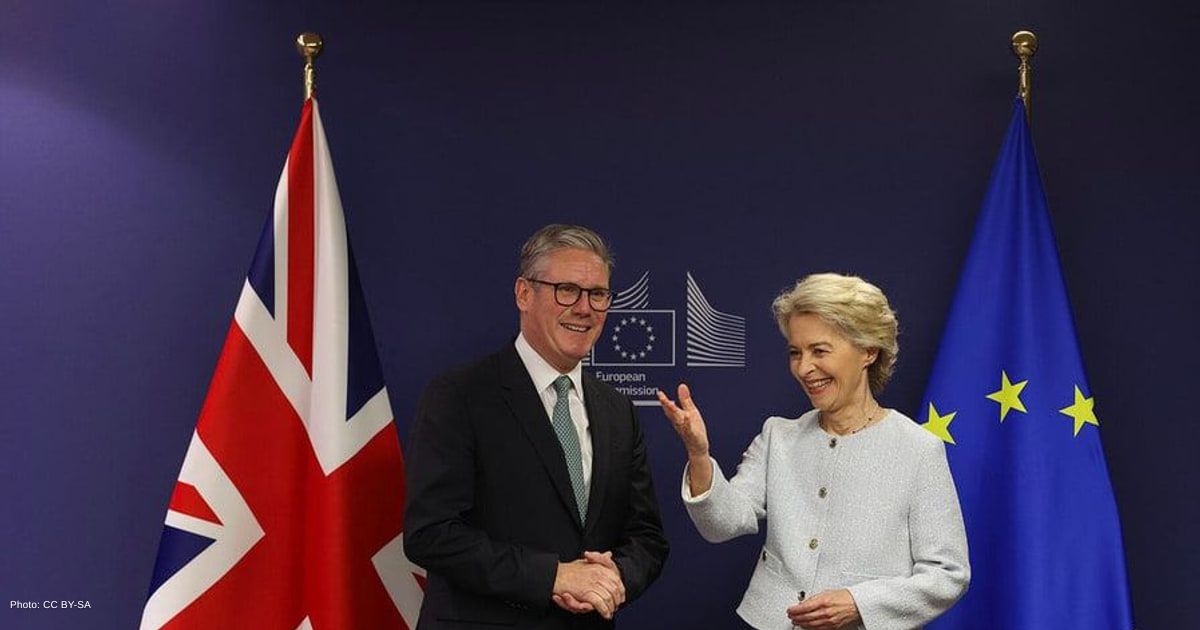
The UK led Europe in this category, raising roughly £2.1 billion, placing Britain at the centre of Europe’s defence startup race. The political backdrop is also shifting. At the first UK-EU summit since Brexit, Prime Minister Keir Starmer and European Commission President Ursula von der Leyen, together with European Council President António Costa, agreed on a new UK-EU strategic partnership.
They also backed a strengthened security and defence partnership. For European defence startups, the reset signals deeper co-operation on security, defence capability and economic resilience beyond trade.
AI becomes Europe’s new defence advantage
AI is becoming central because modern defence is increasingly about speed, scale and information. A drone is no longer just an aircraft. It can be a sensor, a communications node and a data-gathering platform. With the right software, it can help identify patterns faster than human teams alone.
The real competition is now beyond hardware, focusing on the intelligence layer that controls, connects and enhances defence systems. European defence startups are targeting this space. Helsing develops AI-enabled autonomous systems across domains, Quantum Systems builds AI-powered defence and security platforms, and TEKEVER specialises in AI-driven autonomy for civil and defence missions, integrating software and advanced autonomy.
Governments are working to turn private-sector momentum into broader capability. The European Commission will invest €1.07 billion (£928 million) in 57 EDF projects, covering AI, cyber defence, drones, and counter-drone systems. This support is vital because startups need more than enthusiasm. They require testing, standards, procurement pathways, and scalable production to ensure their innovations reach operational use.
The next advantage will not come from one breakthrough. It will come from connecting many technologies into trusted systems. AI can help operators process signals, prioritise threats and manage autonomous assets. Used carefully, it can make European forces more responsive without removing human responsibility.
Power shift depends on scale, trust, speed
The power shift is not only about invention. It is about who can turn innovation into a reliable capability. Europe has promising companies, stronger investor interest and growing public support. The harder task now is scaling production, proving systems under real pressure and making sure new technologies can move from prototype to the front line.
But scale alone will not be enough. Trust will be just as important as speed. Defence AI must work in contested environments, respect allied rules and remain accountable to democratic oversight. That is where Europe can build an advantage that is not only advanced but also responsible.
European defence tech is entering a period of growth with strategic weight. If startups, governments and established industry keep moving in the same direction, AI could help Europe strengthen resilience, reduce dependence and support allies more effectively. The opportunity is serious, and so is the responsibility. For Europe, the next stage of defence growth will belong to those who build quickly, test honestly, and earn trust before the next crisis arrives.