

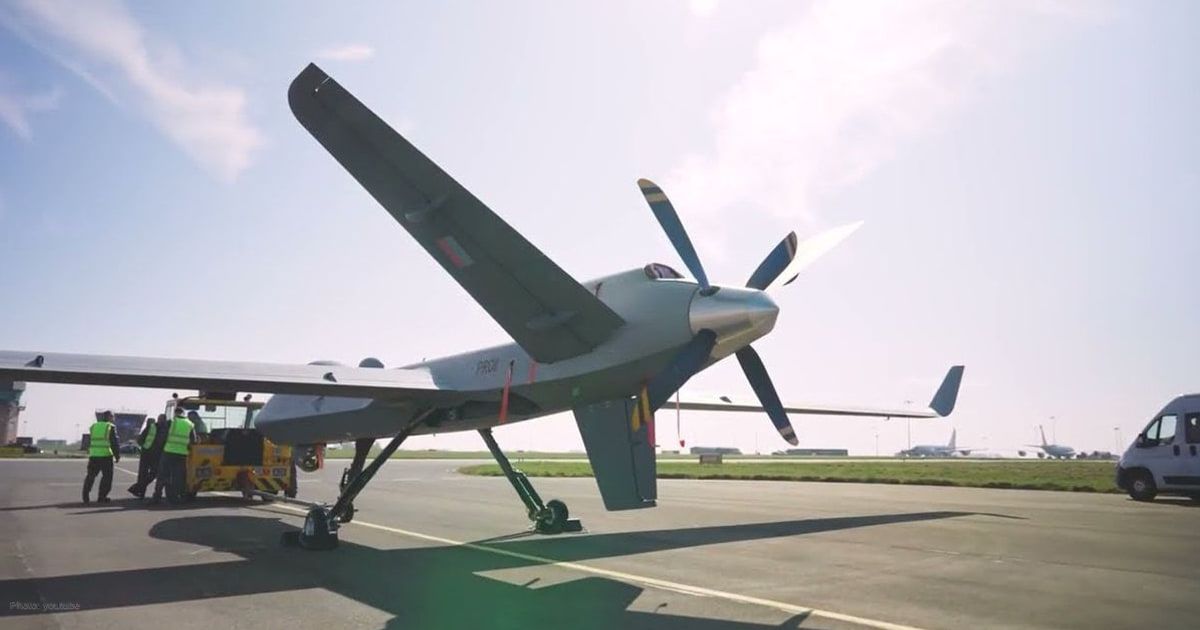
Europe’s defence sector is no longer a lumbering stronghold of legacy contractors. It now behaves like a neural network under strain, rewiring itself on the fly as artificial intelligence seeps into drones, sensors, and battlefield decision loops. The catalyst is clear: the Russo-Ukrainian War has transformed experimental technologies into everyday essentials, squeezing a decade’s worth of innovation into just a few turbulent years.
What once felt like gradual modernisation now resembles a sweeping upgrade unfolding in the midst of conflict. The pace has changed from cautious preparation to rapid iteration, where adaptability itself becomes a strategic asset.
Key Takeaways
Europe is rapidly integrating artificial intelligence into defence systems, driven by the evolving nature of drone warfare and the demands of modern conflict.
- The Russo-Ukrainian War has accelerated the adoption of experimental technologies, transforming the defence sector’s approach to innovation.
- AI is becoming a crucial component in drones and battlefield decision-making, enhancing capabilities such as navigation and target recognition.
- European defence spending is surging, with significant investment in AI and autonomous systems, fostering a new ecosystem of defence tech startups.
The frontlines go digital
Drones were once on the margins of military planning, useful for reconnaissance but rarely decisive. That illusion was shattered in Ukraine. Small, inexpensive systems now scout, strike, and jam with tireless frequency, forcing armed forces to adapt faster than procurement cycles have ever allowed.
Artificial intelligence is the unseen engine in this context, enabling navigation in GPS-denied zones, automated target recognition, and swarm coordination under electronic warfare pressure. This is where AI in defence systems changes from a buzzword to the backbone. Algorithms aren’t replacing soldiers, but they are reshaping how decisions are made, cutting down reaction times and broadening situational awareness.
European programmes increasingly prioritise resilience in contested settings, where signals are jammed and communications splinter. The European Defence Fund has already earmarked money for projects ranging from AI and drones to counter-drone systems, reflecting how modern conflict is as much a battle of signals as of steel.
Capital rushes to the front
War has a way of bending budgets. European defence spending has surged across the board, though unevenly by country. EU member states collectively moved from around £295 billion in 2024 to an estimated £328 billion in 2025, marking sustained double-digit growth in recent years. Meanwhile, European members of NATO together spent hundreds of billions of pounds in 2025, with most countries now meeting or approaching the 2 per cent of GDP benchmark.
Zoom out, and the direction becomes even more striking. Analysts think European defence spending could near £690 billion annually by the decade’s end, driven particularly by equipment, research, and advanced systems development.
Private investment has taken notice. Since 2022, hundreds of defence technology startups have sprung up across Europe, forming a new tier beneath the major primes. Venture capital has accelerated into the billions, with AI, robotics, and autonomous systems drawing the lion’s share. The NATO innovation fund has become a key sign of this shift, appearing in various startup funding rounds and anchoring a distinctly European investment scene.
Even global finance is getting involved, with major institutions expanding security-focused investment schemes across Europe, targeting startups as well as industrial supply chains. Defence has crossed a threshold, shifting from a narrow sector to a core pillar of economic strategy, tightly interwoven with growth, resilience, and technological leadership.
Europe’s race to build its own arsenal
At the heart of this transformation is a new generation of companies. Germany’s Helsing has become a flagship, raising hundreds of millions in funding and achieving a multi-billion valuation while expanding into drones, aircraft, and autonomous systems. Its trajectory reflects a broader shift towards software-driven warfare, where code updates can change battlefield capability almost overnight.
Other players back up the trend. Quantum-Systems has scaled rapidly, hitting multi-billion valuation territory as demand for dual-use drones has soared. Meanwhile, Tekever has gained a profile through live deployment, especially in surveillance and maritime operations connected to Ukraine.
This ecosystem is being actively moulded by policy. European governments are driving funding, procurement reform, and innovation frameworks designed to reduce dependence on foreign technology while ramping up home-grown capability.
Nonetheless, fragmentation across national systems and ethical issues around autonomous decision-making continue to cause headaches. The result is a continent in flux, where defence is increasingly shaped by data, software, and flexibility—not just hardware.
Comments
One response to “Europe accelerates AI in defence systems as drone warfare evolves”
[…] effort to transform the fighter into a highly connected combat platform capable of operating within complex battle networks. Expected enhancements include improved sensors, advanced electronic warfare systems, secure […]