

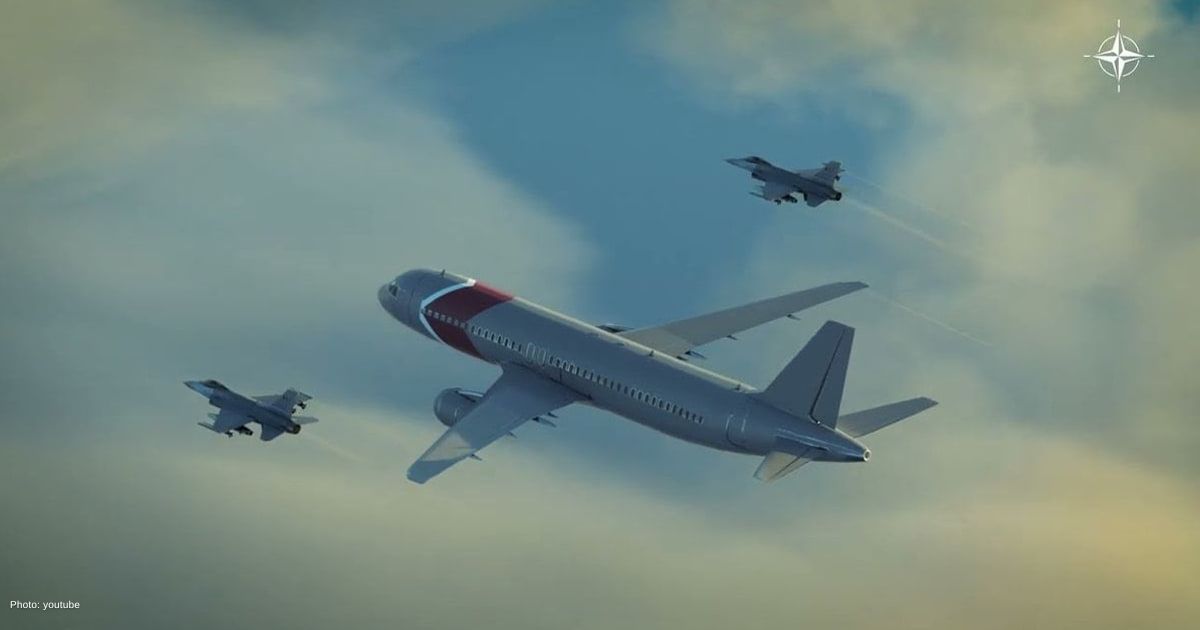
Europe’s effort to strengthen its shared air defence has gained momentum through the European Sky Shield Initiative (ESSI), a Germany-led programme involving more than 20 countries. The project aims to connect national air defence assets into a coordinated network capable of responding to drones, missiles, and aircraft.
It was largely shaped by lessons from Russia’s war in Ukraine, where large-scale aerial attacks exposed gaps in existing European protection. This shift has become a central example of European defence tech cooperation across NATO members.
Key Takeaways
Europe’s shared air defence initiative, ESSI, aims to integrate national defence assets into a coordinated network to counter modern aerial threats, though it faces political and technical hurdles.
- Russia’s war in Ukraine highlighted gaps in existing European air defences, leading to increased investment in counter-drone systems and NATO interoperability technology.
- The ESSI programme includes a layered defence system with short, medium, and long-range systems such as the IRIS-T SLM, Patriot PAC-3 MSE, and Arrow-3, each addressing specific threats.
- Integration challenges include differing military hardware, command systems, and procurement cycles, as well as political concerns over control and prioritisation of national defence.
Why the initiative was created
The urgency behind ESSI comes from Russia’s use of mass missile and drone strikes in Ukraine, which showed how quickly air defences can be overwhelmed. European governments recognised that many systems were not designed for sustained, multi-directional attacks involving low-cost drones and cruise missiles.
As a result, investment in counter-drone systems increased across the region to address emerging battlefield realities. This also pushed NATO members to rethink NATO interoperability technology, especially the ability of different national systems to share data and respond in real time during joint defence operations.
Key systems forming the defence shield
ESSI is built around a layered structure combining short, medium, and long-range systems to address different threats. At shorter ranges, Germany’s IRIS-T SLM, developed by Diehl Defence, is used to intercept drones and aircraft with the help of advanced radar tracking. Its role has become increasingly important in defending against low-flying threats that are difficult to detect early. This system forms a key part of Europe’s evolving air defence network and is widely discussed in modern European defence tech planning.
For medium-range defence, the US-made Patriot PAC-3 MSE is already deployed in several European countries, including Germany, Poland, Spain, and the Netherlands. It provides protection against ballistic missiles, cruise missiles, and aircraft, making it one of the most widely used systems in NATO’s defensive structure.
At the highest layer, the Israeli-developed Arrow-3 delivers exo-atmospheric interception capabilities, allowing it to engage ballistic missiles outside the Earth’s atmosphere. Together, these systems form a multi-layered shield, although full integration remains a complex technical task.
Integration, politics, and delivery challenges
Despite its ambition, ESSI faces major challenges in integration. Each participating country operates different military hardware, command systems, and procurement cycles, which makes real-time coordination difficult.
The idea is for one country’s radar to detect a threat while another country’s interceptor responds, but this depends on seamless communication and shared operational standards. These requirements highlight how critical NATO interoperability technology has become for modern collective defence.
Interoperability and command coordination issues
A key challenge is interoperability, as most systems were originally built for national use rather than shared operations. Upgrading command-and-control networks requires both technical upgrades and agreement on how data and engagement decisions are shared.
Efforts like the NATO DIANA accelerator aim to support new technologies that improve coordination, including faster threat detection and better digital tools. However, uneven defence procurement Europe processes still slow deployment due to different national budgets and timelines, raising the risk that ESSI could function as separate national systems instead of one unified defence layer.
Political concerns also affect integration speed. Some countries are cautious about sharing too much control in a joint system during crises, while others prioritise strengthening their own national defence first. These differences do not stop cooperation, but they do slow full operational unity.
ESSI marks a major shift in Europe’s approach to security, with a stronger focus on shared deterrence and joint response. It reflects how governments are adapting to modern aerial threats that demand faster detection and reaction than older systems were built for. If it succeeds, it could improve regional resilience and close gaps during large-scale attacks. However, its long-term impact will depend on whether political agreement and technical integration move forward together across all member states.